
Here is how to make a fantasy football schedule: pick the number of regular season weeks, use a round robin so every team plays every other team once, then fill any extra weeks with division games or rematches.

That is the whole method. The rest of this guide shows the math, a simple pairing trick you can do on paper, and how to place byes, divisions, and playoffs. If you would rather skip the paperwork, our fantasy football schedule maker can help you lay out the weekly matchups.
Many hosting platforms build a schedule for you automatically. This guide helps if you run a custom league, use a spreadsheet, or just want to understand how fair matchups are made.
How to make a fantasy football schedule in five steps
- Count your teams. Most leagues have 8, 10, 12, or 14 teams. An odd number works too, but one team sits out each week.
- Pick the regular season length. Choose how many weeks you want before the playoffs. Your playoff weeks must finish before the NFL season ends.
- Run one round robin. This gives every team one game against every other team. The next section shows how many weeks that takes.
- Use the leftover weeks. If your season is longer than one round robin, add rematches or division games.
- Add the playoffs. Decide how many teams qualify, how seeds work, and what the last place teams do.
Write the finished grid where everyone can see it, such as a shared sheet or the league chat. People trust a schedule they can check.
Round robin basics: how many weeks does it take?
This is the math behind how to make a fantasy football schedule that is fair. A round robin means every team plays every other team once. With an even number of teams, one full pass takes the number of teams minus one weeks. With an odd number, it takes as many weeks as there are teams, and one team gets a bye each week. This round-robin overview explains the same rule.
Here is what that looks like in a 14 week regular season:
| Teams | Weeks for one full pass | Weeks left in a 14 week season |
|---|---|---|
| 8 | 7 | 7 (a second full pass) |
| 10 | 9 | 5 |
| 12 | 11 | 3 |
| 14 | 13 | 1 |
In a 12 team league, every team plays all 11 opponents in the first 11 weeks. That leaves 3 weeks to fill. Many commissioners use those weeks for rivalry games. Pick the rematches by a rule you can explain, such as last year’s finish or the closest neighbors in the draft order.
Count the games. A 12 team league plays 6 games a week. One full pass has 66 games in total (12 times 11, divided by 2), which is 11 weeks of 6 games.
How to make a fantasy football schedule with the circle method
The circle method is the standard way to pair teams by hand. It works for any even number of teams, and you only need a pen.
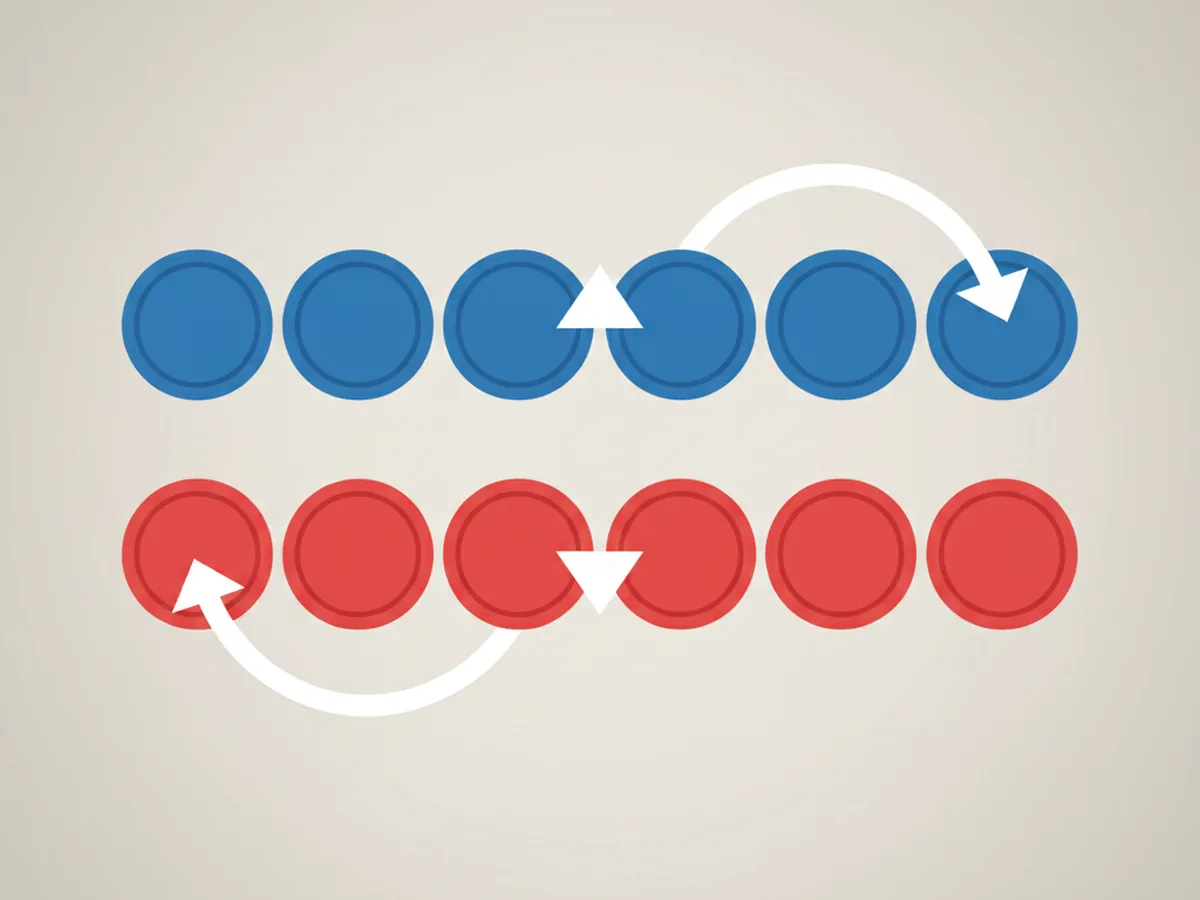
- Number your teams 1 to 6 (or however many you have).
- Write them in two rows. Week 1 pairs each team with the one across from it.
- Keep team 1 in place. Move every other team one spot around the circle.
- Pair the teams across from each other again. That is the next week.
- Repeat until the rows return to the start.
Here is a full 6 team example. It takes 5 weeks, and every pair meets exactly once.
| Week | Game 1 | Game 2 | Game 3 |
|---|---|---|---|
| 1 | 1 vs 6 | 2 vs 5 | 3 vs 4 |
| 2 | 1 vs 5 | 6 vs 4 | 2 vs 3 |
| 3 | 1 vs 4 | 5 vs 3 | 6 vs 2 |
| 4 | 1 vs 3 | 4 vs 2 | 5 vs 6 |
| 5 | 1 vs 2 | 3 vs 6 | 4 vs 5 |
For a league with an odd number of teams, add a dummy team. Whoever is paired with the dummy has a bye that week. Then shuffle the team numbers before you start, so the draft order does not decide who gets the easy early games.
Divisions, byes, and rivalry weeks
Divisions are optional. They give a big league smaller groups and a simple way to pick rivalry games. They also add rules, so use them only if your league likes the idea.
- Split teams evenly. A 12 team league can use two divisions of six. Mix strong and weak managers by drafting the divisions or by random draw.
- Play everyone once first. A full round robin keeps the schedule fair across divisions.
- Use leftover weeks for division games. In a 12 team league, the last three weeks can be rematches inside each division.
- Space out repeat games. Do not put the same two teams against each other in back-to-back weeks.
Real NFL bye weeks are a separate matter. Your fantasy teams still play those weeks, and managers have to handle the missing players. Fantasy byes only happen if you have an odd number of teams, or if the top seeds skip the first playoff round.
Plan the playoff weeks
The playoffs are the last part of how to make a fantasy football schedule. Choose the playoff weeks first, because they decide how long the regular season can be. Yahoo’s help page lists playoff windows that run from Weeks 14 to 16 up to Weeks 16 to 18, depending on the format. It also supports 4, 6, 7, and 8 team playoffs. See Yahoo’s playoff settings guide for the full list.
Some commissioners avoid Week 18 because NFL teams that have clinched a playoff spot may rest starters. That is a risk, not a rule, so decide what your league prefers.
- 4 teams: two rounds. Top seeds play the bottom seeds.
- 6 teams: three rounds. Seeds 1 and 2 get a first round bye.
- 8 teams: three rounds and no byes. This works well in larger leagues.
Seeding can use overall record or points scored. Pick the tiebreaker before Week 1. If you want to see how likely your own team is to make it, try our fantasy football win probability calculator.
Teams that miss the playoffs still need something to play for. A consolation bracket works, and so does a last place game with a fun penalty. Our list of the best fantasy football punishments has safe ideas.
Common schedule mistakes to avoid
Most problems with how to make a fantasy football schedule come from small oversights, not hard math.
- Unequal games. Check that every team has the same number of games against each opponent, apart from the leftover weeks.
- Playoffs too late. Make sure the final week is not scheduled after the NFL season has ended.
- Hidden changes. Never edit the schedule after the season starts without a league vote.
- No plan for a dropout. Decide ahead of time what happens if a manager quits. A replacement owner is usually the cleanest fix.
- Ignoring the money. If your league pays out prizes, plan the payouts before the schedule goes live. Our fantasy football payout calculator can split the pot.
Final thoughts
Now you know how to make a fantasy football schedule that is fair and easy to check. It is mostly arithmetic and clear communication. Share the grid, agree on the playoff rules, and write down what happens if something changes. Once the schedule is set, your next job is the draft. Our guide to the serpentine draft shows how snake order works.
Frequently asked questions
How many weeks should a fantasy football regular season be?
It depends on your playoff weeks. Count back from the end of the NFL season, leave room for the playoffs, and use what is left. Many leagues use 13 or 14 weeks. Check your platform’s settings, because some set the length for you.
How many teams should make the playoffs?
Common choices are 4, 6, or 8 teams. Smaller leagues often use 4. Larger leagues often use 6 or 8. The right number is the one that keeps most managers in the race until late in the season.
Should my fantasy football league use divisions?
Only if your league wants them. Divisions add rivalries, but they also add rules. A small league can skip them without losing anything.
Do I need to adjust my schedule for NFL bye weeks?
No. Your fantasy teams play every week. NFL byes only affect which players are available to start.
How do I make a fantasy football schedule for an odd number of teams?
Add a dummy team to make the number even. Whoever faces the dummy team has a bye that week. Each team then gets one bye over one full pass.
How often should two teams play each other?
In a full round robin, once. If the season is longer, some teams will meet twice. Pick the rematches by a clear rule and share it before Week 1.
What if someone quits mid season?
Find a replacement owner if you can. If not, the league can treat that team as a forfeit each week or remove it with a vote. Choose the rule before the season starts.
Should I build the schedule by hand or use a tool?
A tool is faster and makes fewer mistakes, but the circle method above works fine for a small league. Our schedule maker is one option. Whichever you use, check that every pair of teams meets the same number of times.